
April 22, 2025, marked a dark milestone in India's security history. The serene Baisaran Valley in Pahalgam—a place where newlyweds celebrated love and families created memories—became a graveyard.
In minutes, the bullets that silenced 26 lives also silenced the valley's economic engines. This wasn't just another terror attack. This was a calculated blow to Kashmir's fragile recovery. The economic catastrophe that followed reveals a brutal truth: security incidents don't just kill people. They destroy livelihoods.
A Region on the Brink of Revival
To understand the devastation, we must first understand what was lost. Before April 22, 2025, Kashmir was experiencing unprecedented economic recovery.
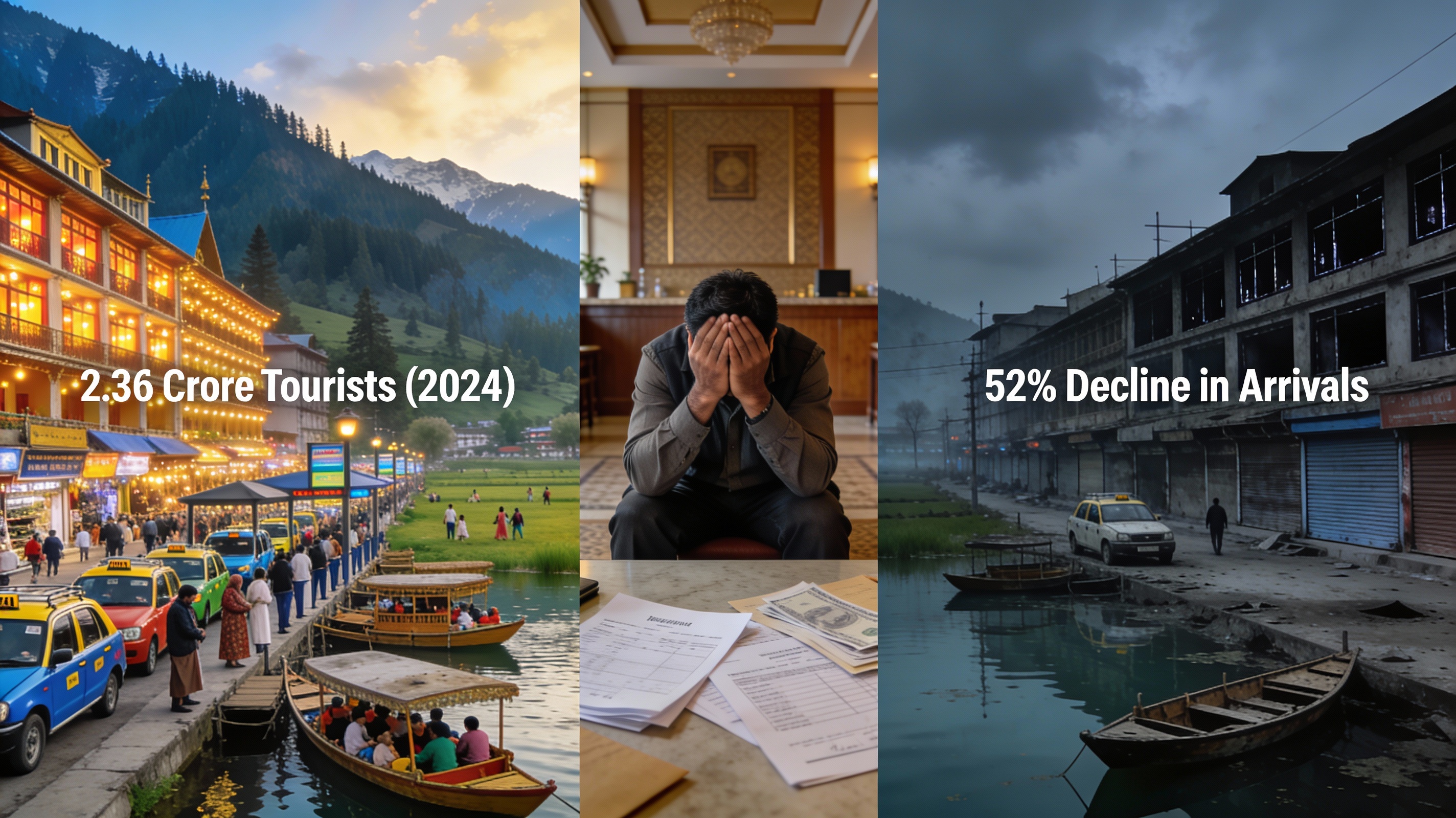
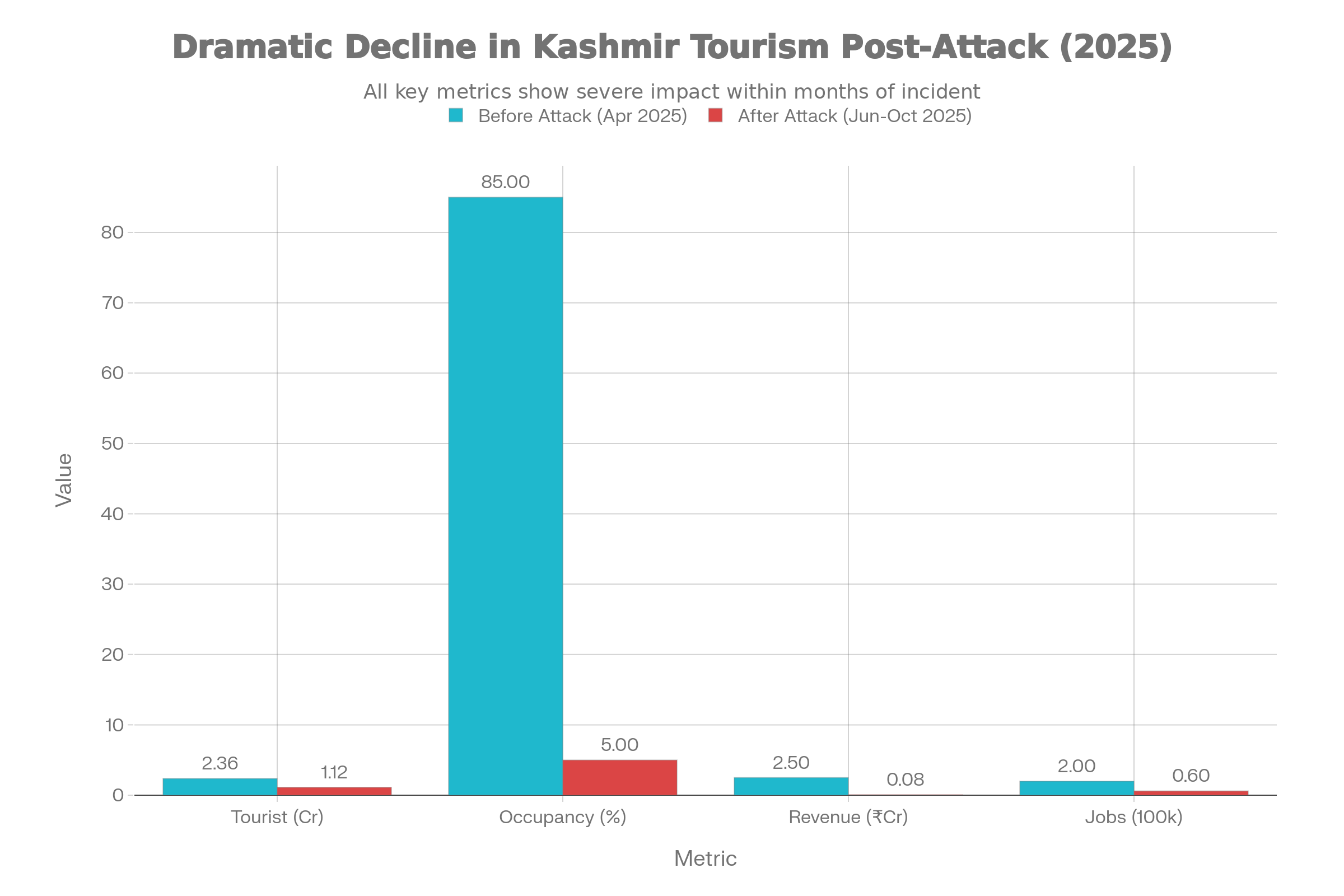
- 2024 Arrivals: 2.36 crore tourists.
- GDP Share: Tourism contributed 7-8% of Kashmir's GDP (₹21,200 crore).
- Momentum: Srinagar's Tulip Garden attracted 8.14 lakh visitors in just 26 days.
The valley wasn't just recovering. It was booming. Young entrepreneurs borrowed money to buy taxis and renovate hotels. Families bet their futures on this momentum. Then came April 22.
The Immediate Collapse
The aftermath was swift. Within 48 hours, 90% of bookings were cancelled. Hotels operating at capacity saw occupancy drop to single digits.
By October 2025, six months later, 95% of Kashmir's 200,000 hotel beds were empty. One hotel manager summed it up: "We went from earning ₹1 crore during peak season to barely scraping together ₹50,000."
The Employment Tsunami
Tourism is an ecosystem. When it stops, everything stops.
- 90,000+ individuals rendered unemployed.
- 600+ taxi drivers in Pahalgam alone left idle.
- 1,000+ commercial vehicles became depreciating liabilities.
Mohammad Ali, a driver with 20 years of experience, lost ₹5 lakh in earnings. His vehicle sat parked, a growing debt burden. The All Kashmir Houseboat Owners Association reported that investments taking a generation to build were being sold off in distress.
The Debt Trap: When Business Becomes a Burden
The cruelest irony is that those who took the biggest risks—investing in hotels and taxis via loans—were hit the hardest.
With occupancy at zero, EMIs couldn't be paid. Families sold ancestral land and jewelry to satisfy banks. In July 2025, the J&K High Court ruled in favor of banks seizing mortgaged property under the SARFAESI Act, intensifying the fear among local entrepreneurs.
The Destination Closures
Adding insult to injury, the government sealed off 48 of 87 major tourist destinations including Doodhpathri, Yousmarg, and Aharbal.
Even by January 2026, nine months later, Doodhpathri remained effectively closed. The message sent to the world was clear: Kashmir is not safe. Kashmir is still shut down.
Collateral Damage: Economy-Wide Crisis
The crash triggered a domino effect. Handicrafts, horticulture, and retail all suffered.
.png)
The Multiplier Effect: Every rupee spent by a tourist generates ₹3.11 in the local economy. With direct revenue losses of ₹2,700 crore, the total economic loss is estimated at over ₹10,000 crore.
The Current State: January 2026
As of today, the situation remains dire. While Chief Minister Omar Abdullah has unveiled new tourism calendars and some spots like Drang have reopened, recovery is slow.
Debt crises continue. Youth unemployment remains above 30%. The "safe destination" narrative has evaporated.
"First it was the conflict that took opportunities from us. Now it's fear. Both steal our future."
The Human Truth
Nine months later, Pahalgam's main bazaar is quiet. But there is resilience. In early January, a cab driver named Gulam Nabi returned a tourist's lost iPhone and cash. The story went viral.
It symbolized what Kashmiris want the world to know: We are still here. We are still honest. We are still welcoming.
Recovery will be slow and painful. But the question is not whether Kashmir will recover. The question is: What kind of economy will emerge? Will it be resilient, or will it repeat the same fragilities?