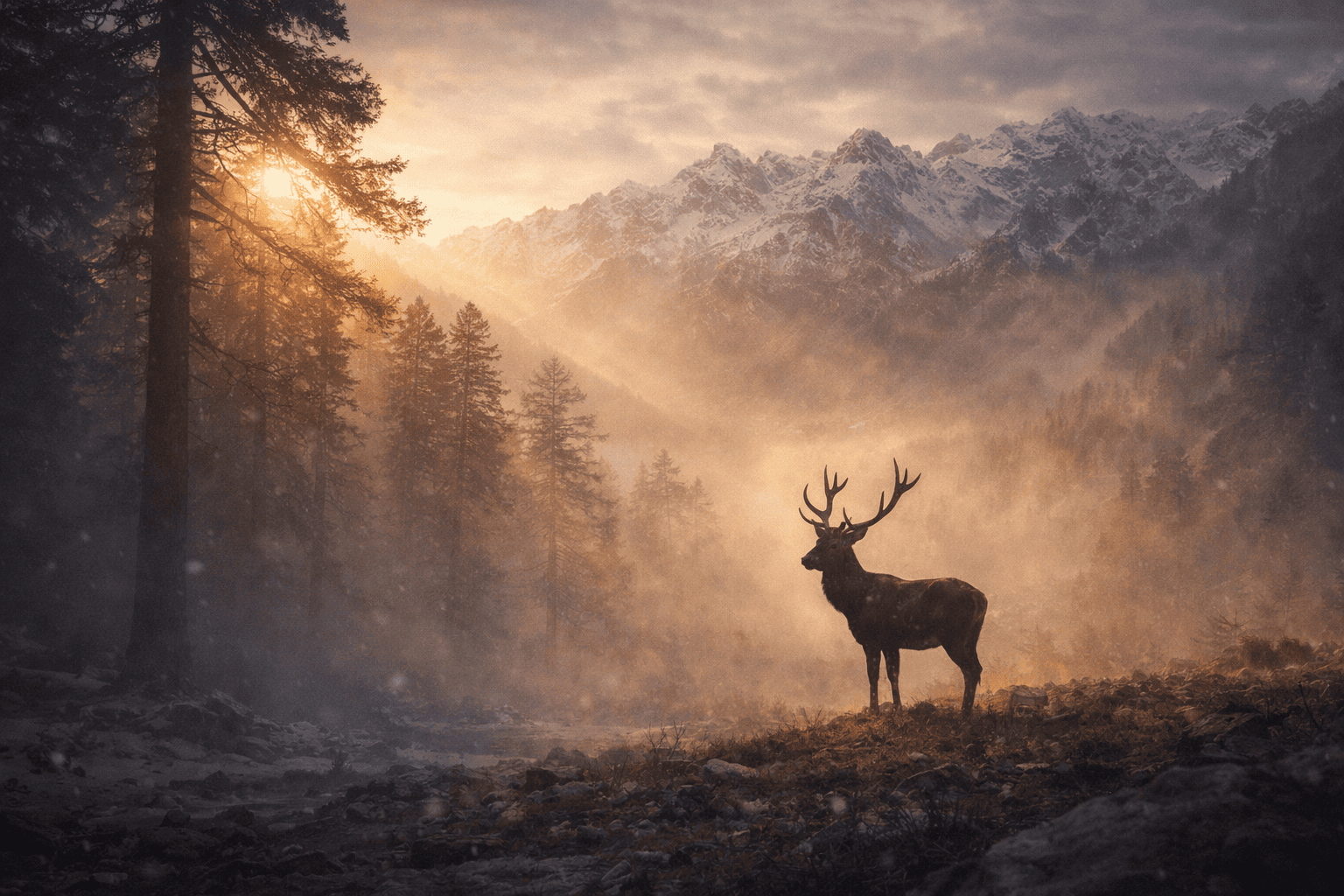

Deep in the Zabarwan range, just 22 kilometers from the chaos of Srinagar, lies a sanctuary called Dachigam. It is the last fortress of a king who has lost his kingdom.
The Hangul (Kashmir Stag) is not just an animal. It is the state animal of Jammu & Kashmir. It is the only surviving subspecies of Red Deer in the entire Indian subcontinent. It is majestic, with antlers that reach for the sky like branches of an ancient Chinar.
But today, the king is dying. From a population of over 5,000 in the early 1900s, fewer than 300 remain. They are the ghosts of the mountains, fading into memory before our very eyes.
The Collapse: A Century of Loss
The decline of the Hangul is a tragedy written in slow motion. The latest census (2023) showed a marginal increase to roughly 289 individuals, but this number is precariously low. For a species to be genetically viable, it needs a population far larger.
- 1900s: ~5,000 Hangul roamed from Karen to Kishtwar.
- 1970: Population crashed to ~150 due to poaching.
- 2026: Still hovering below 300, confined largely to Dachigam.
Why is the Hangul Dying?
The Hangul isn't dying of old age. It is being squeezed out of existence by human greed and mismanagement.
1. The Cement Dust of Khrew
Just outside the sanctuary lies the industrial hub of Khrew, home to massive cement factories. The dust from these plants settles on the leaves and grass in the Hangul's habitat.
Imagine eating food coated in cement dust every day. This causes respiratory issues and long-term health decline in the deer population. The pristine air of the sanctuary is tainted by the gray smog of industry.
2. The Sheep Farm Occupation
For decades, a government-run sheep breeding farm occupied a massive chunk of Dachigam's core area. While it has recently been relocated after years of activism, the damage to the habitat—overgrazing and competition for fodder—has been severe.
"We protected the sheep to feed humans, while the stag starved in its own home."
3. Habitat Fragmentation
The Hangul is a migratory animal. Historically, it moved to the upper reaches in summer and lower valleys in winter. Today, that corridor is blocked.
Urban sprawl, golf courses, and roads have cut off their ancient migratory routes. The animals are trapped in an island of protected forest, leading to inbreeding and vulnerability to predators like leopards and black bears.
The Conservation Paradox
Efforts have been made. The "Project Hangul" was launched in the 1970s. Captive breeding centers were established at Shikargah. But success has been elusive.
Why? Because you cannot save a species in a zoo if its home is burning. The focus has often been on numbers, not on habitat restoration.
Furthermore, the male-female ratio and the fawn survival rate remain alarming. For every 100 females, there are only about 12-15 males. Without a healthy gender balance, the population cannot bounce back.
The Unsung Heroes
Amidst the gloom, there are heroes. The forest guards of Dachigam walk miles in deep snow, tracking the animals, checking for poachers, and conducting the census.
Researchers like Dr. Mukesh Thakur and local wildlife experts have dedicated their lives to studying the Hangul's genetics, proving it is a distinct species deserving of the highest protection status globally.
Why It Matters
You might ask: "We have unemployment, drug crises, and political issues. Why care about a deer?"
Because the Hangul is the barometer of our ecosystem. If the Hangul dies, it means our forests are sick. If our forests are sick, our water sources—which originate in these protected areas—will fail.
The Hangul is also a symbol of Kashmir's unique identity. It exists nowhere else on Earth. Losing it would be like losing the Chinar or the Jhelum. It is an erasure of who we are.
Conclusion: A Roar in the Silence
October is the rutting season. If you stand quietly in Lower Dachigam, you might hear the "rut"—the powerful, haunting roar of the male Hangul calling out to a mate.
That roar is becoming fainter every year.
We are the generation that will decide the fate of this species. Will the Hangul become a myth we tell our grandchildren about? Or will we give it the space, the silence, and the respect it needs to thrive again?
The Ghost of Dachigam is watching us. Let us not fail it.