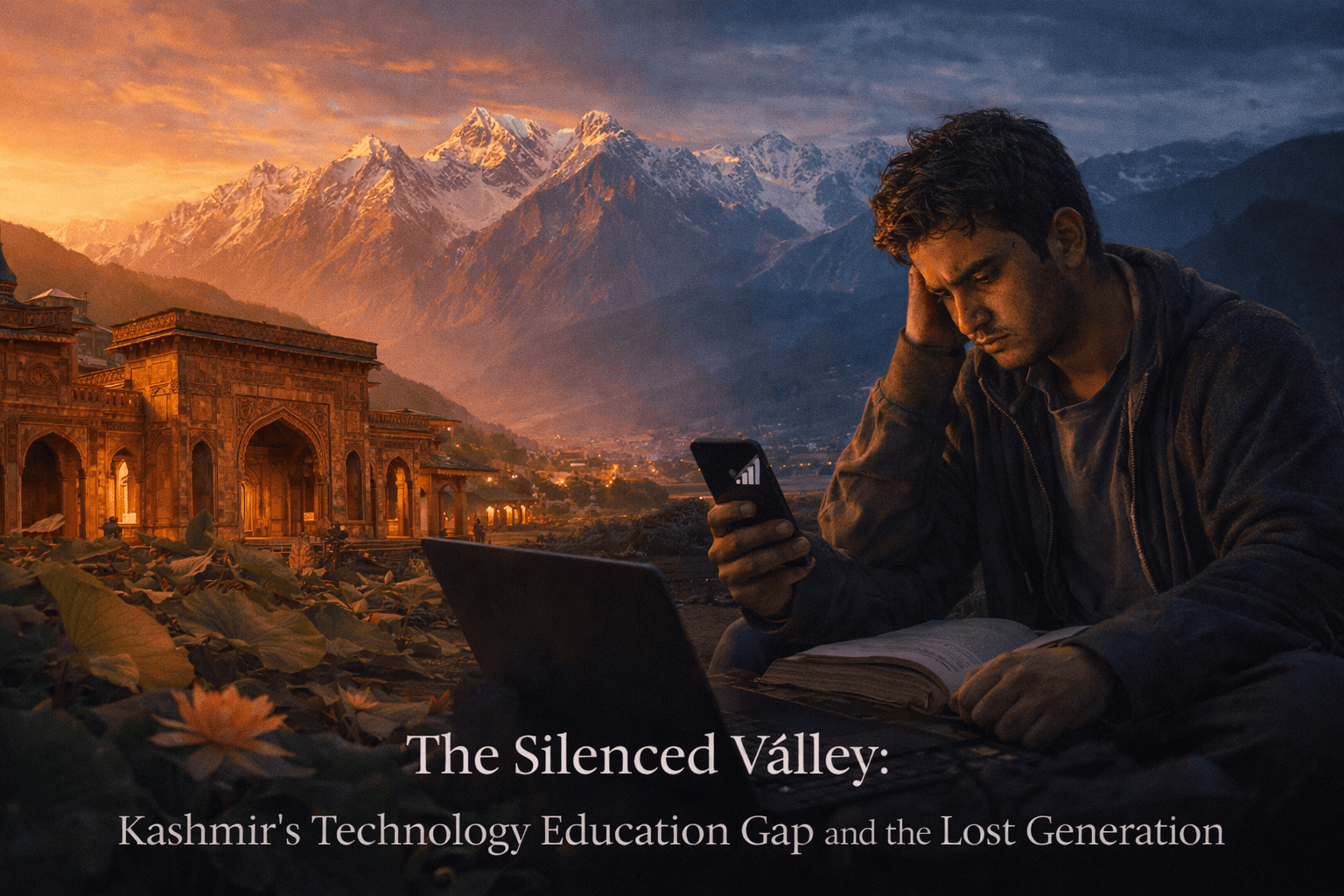

In the early hours of August 5, 2019, the valley of Kashmir fell into an unprecedented digital silence. What began as a political decision transformed into the systematic erasure of a generation's access to knowledge.
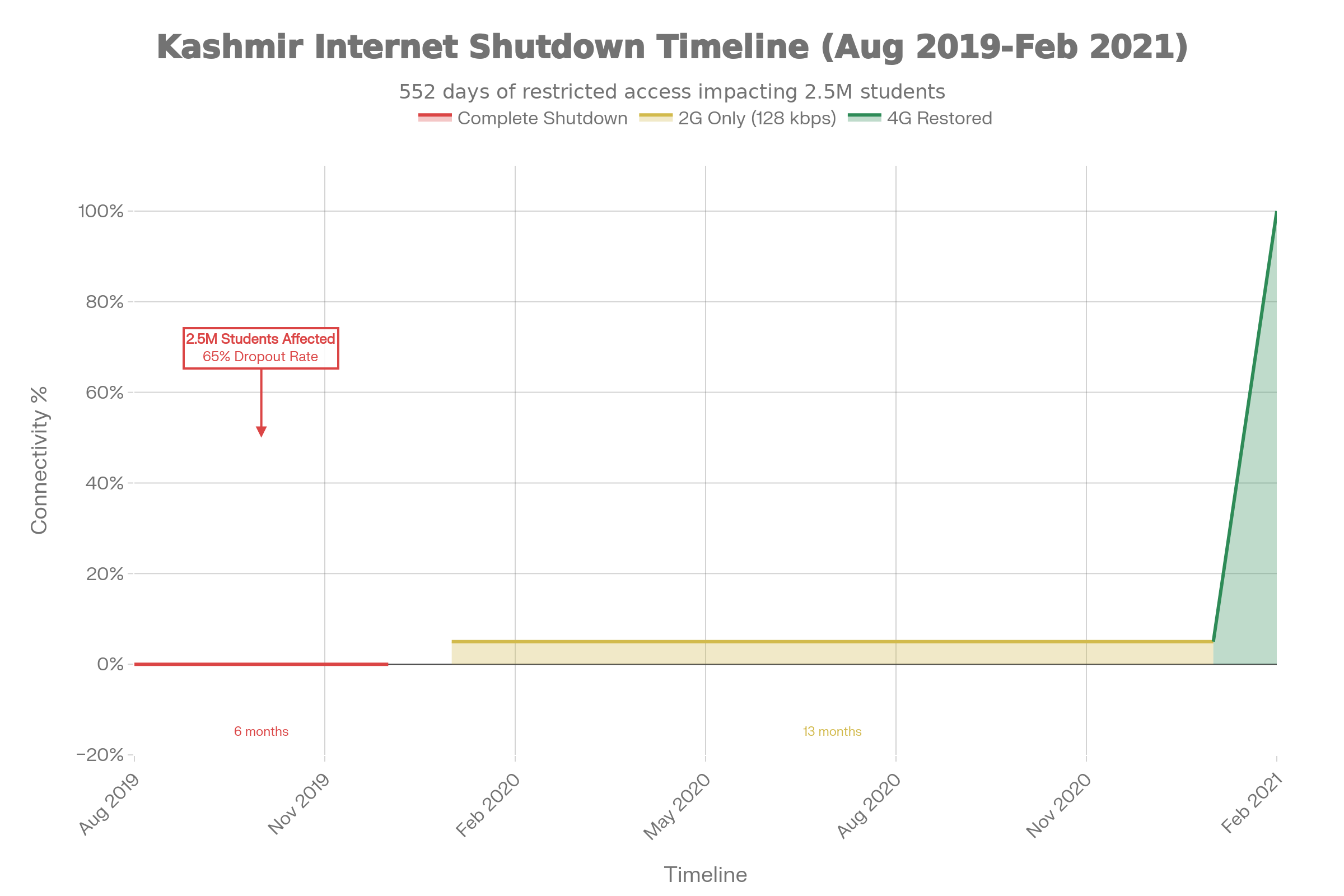
For 552 consecutive days, Kashmir experienced the world's longest internet shutdown in any democracy. For 2.5 million students, this wasn't just about missing WiFi. It was about being left behind in a world that was moving forward without them.
Kashmir's Golden Age: When the Valley Blazed with Knowledge
To understand what was lost, we must remember what Kashmir once was. From the 7th century reign of Lalitaditya to the Sultanate era's network of madrasas, Kashmir was a beacon of intellectual brilliance.
Think of Mawlana Anwar Shah Kashmiri. Born in the remote Lolab valley in 1875, he traveled to Deoband and became one of the greatest scholars of the Islamic world. His life proved that a Kashmiri could not only match the world's intellect but exceed it.
Or consider Allama Iqbal, whose philosophy of
Khudi (Self) emphasized education as the awakening of human
potential.
"Neither the mullah nor the jurist is aware of the fact
that..."
— Iqbal's incomplete quote hints at his disdain for stagnant
knowledge. He believed education must produce action.
What would these giants say about a generation deliberately cut off from the tools of learning?
The Digital Apocalypse: 552 Days of Darkness
Phase One: Complete Darkness (Aug 2019 - Jan 2020)
For six months, absolute silence. No emails. No Google. No online results. Shabir, a Class X student, faced board exams with 30% of his syllabus unfinished. "Without the internet, studying became complex. I faced severe anxiety," he recalls.
Phase Two: The 2G Trap (Jan 2020 - Feb 2021)
When the internet returned, it was a cruel joke: 2G only.
Imagine downloading a PDF on a connection from 2003. Imagine attending a Zoom class on 128 kbps. In a single school in Awantipora, enrollment dropped from 32 students to 11. Teachers watched helplessly as 5-minute delays between questions and answers made teaching impossible.
"Students weren't being taught; they were being punished for trying to learn."
The Aftermath: A Generation in Digital Poverty
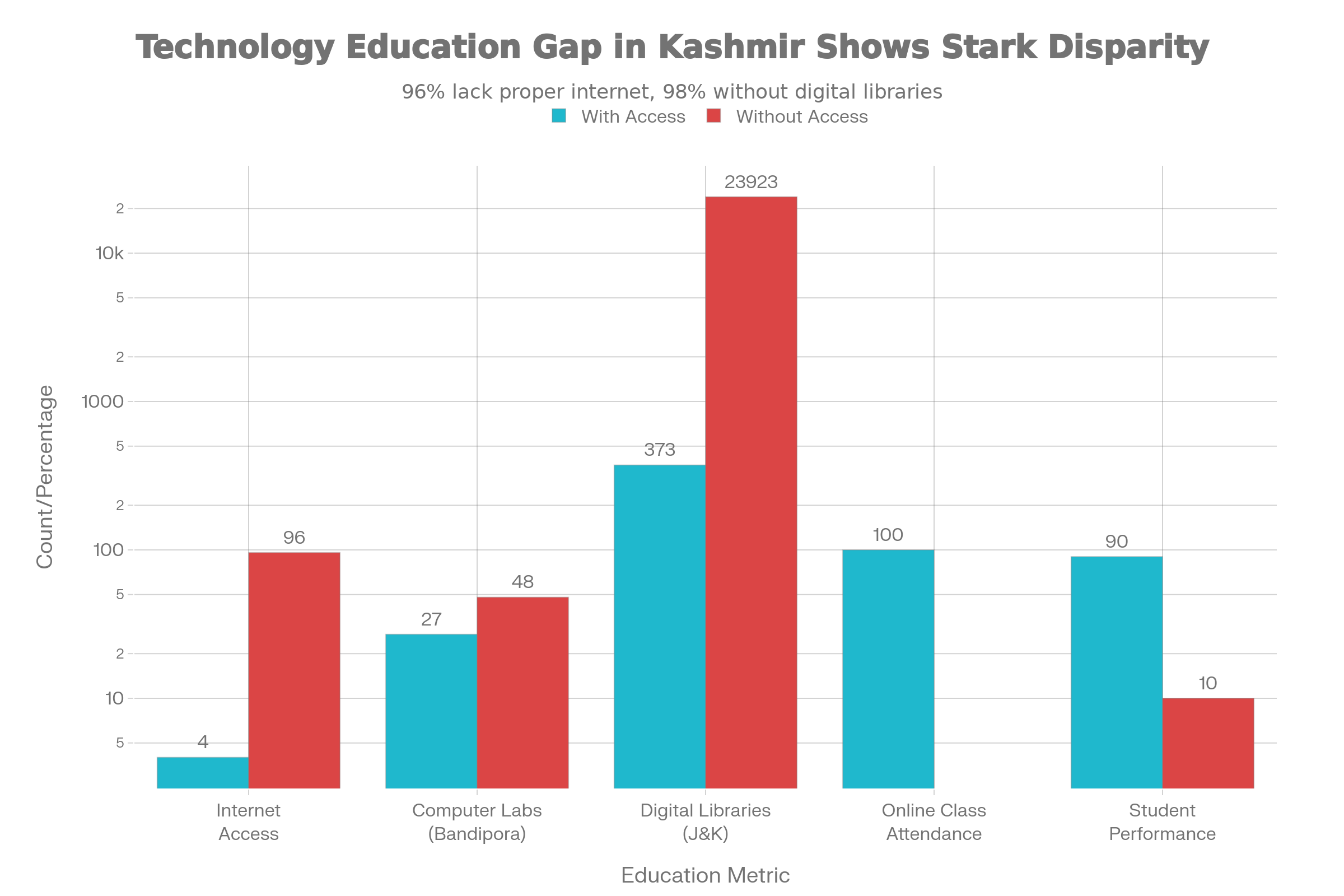
Today, more than five years later, the scars remain visible in the data:
- 98% of schools in J&K lack digital library access.
- 48 out of 75 schools in Bandipora lack functional computer labs.
- $2.4 Billion lost in the first six months alone.
A generation of digital natives—who should have been learning AI and coding—spent 18 months struggling to download a single PDF.
The Unhealed Wound
Why does the gap persist?
- Infrastructure Deficit: Schools still lack reliable electricity and labs.
- Psychological Damage: Trust in online learning was shattered.
- Policy Inaction: Despite the Supreme Court declaring internet a fundamental right, recovery has been slow.
Conclusion: Remembering the Lost Time
Kashmir's golden age didn't end in the medieval period. It was paused on August 5, 2019.
The tragedy isn't just the 18 months lost. It is the permanent shift in trajectory for millions. The girl in Kupwara who wants to code but has no computer. The boy in Bandipora who cannot access Coursera.
We must remember this period not just as history, but as an ongoing crisis. The question now is: Will we rebuild it? The students of Kashmir deserve nothing less.
Sources: Kashmir Chamber of Commerce, J&K Education Dept Data, Supreme Court Judgments, Student Testimonies.