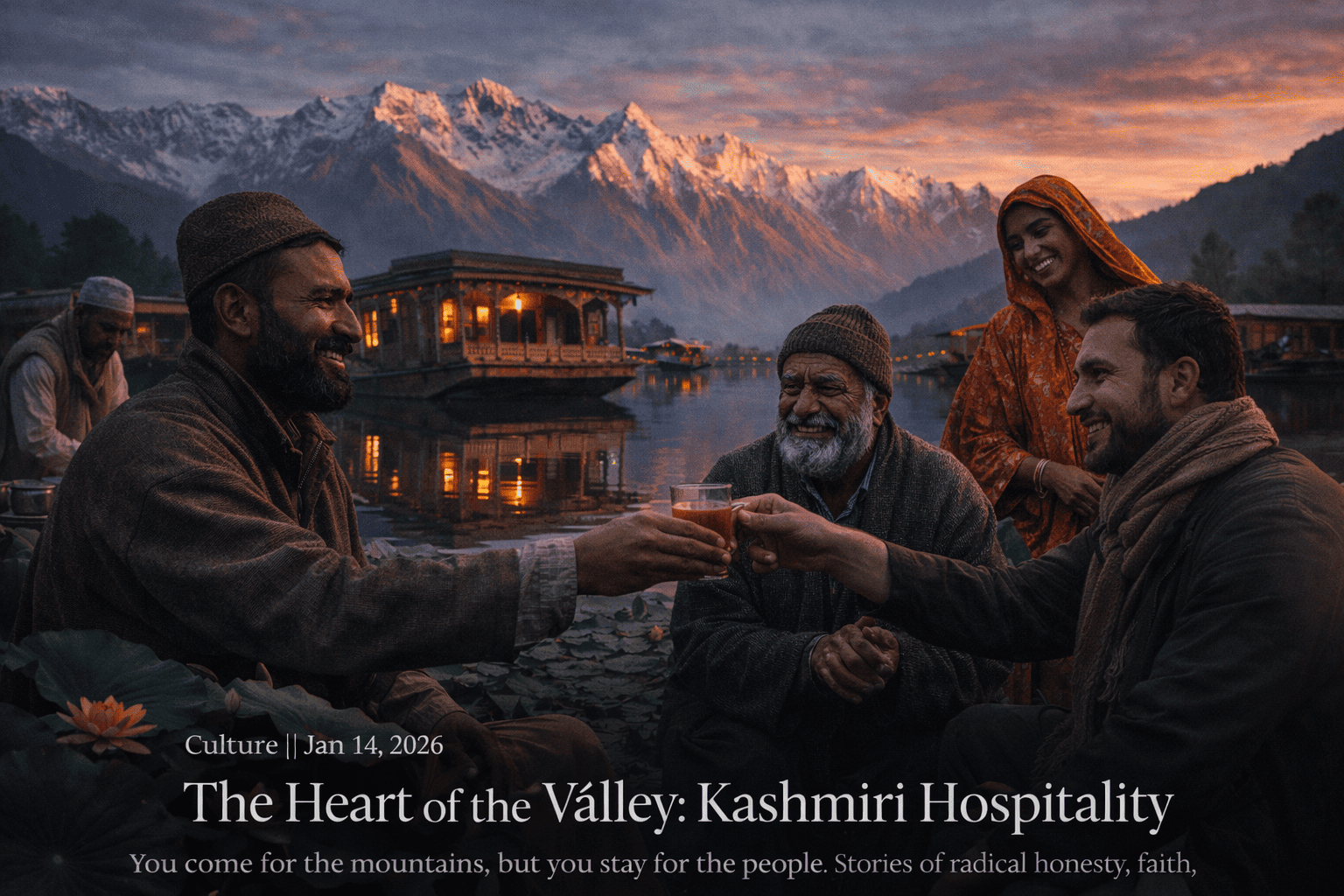

They say you come to Kashmir for the mountains, for the Dal Lake, for the snow. But ask anyone who has visited, and they will tell you a different story. You come for the view, but you stay for the people.
In a world that is becoming increasingly transactional, Kashmir remains a sanctuary of an ancient, unwritten law: Mehman Nawazi. Here, a guest is not a customer; a guest is a blessing from God (Rahmat).
The Spiritual Root of Kindness
To understand why a Kashmiri shopkeeper will leave his shop to guide you, or why a stranger will invite you in for tea, you must understand the faith that pulses through this valley.
Kashmir is Pir Waer—the Alcove of Sufis and Saints. The teachings of Islam here are deeply intertwined with service to humanity (Huqooq-ul-Ibad). Children are taught from a young age that to feed a stranger is to feed the soul.
"Mehman (Guest) is beloved to Allah. When they enter your home, they bring light. When they leave, they take away your sins."
This isn't just theology; it is the operating system of Kashmiri society. It is why, despite decades of conflict and economic hardship, the generosity of the common Kashmiri has never wavered.
Chronicles of Radical Honesty
In an era where tourists in major cities clutch their bags tight, Kashmir offers a breath of fresh air. The stories of honesty here are not exceptions; they are the norm.
The Returned Wallet
Just last month, a tourist from Gujarat forgot a bag containing ₹50,000 cash and gold jewelry in a Shikara on Dal Lake. Panic set in. They assumed it was gone forever. Two hours later, the Shikara wallah, an elderly man named Abdul, tracked them down at their hotel. He refused a reward. "This money is Haram (forbidden) for me," he said simply. "My faith does not allow me to feed my children with what isn't mine."
The Forgotten iPhone
In another instance, a trekker dropped an expensive iPhone 15 Pro on a trail near Pahalgam. A local shepherd boy found it. Instead of selling it—which would have fetched him months of income—he walked 10 kilometers to the nearest police post to hand it in. When asked why, he smiled and said, "The owner must be worried about their photos."
These aren't viral marketing stunts. These are everyday acts of sincerity by people who value their conscience over currency.
More Than Just Tea
If you walk through a village in Kashmir, you will hear a phrase repeated often: "Baha chae piyiv" (Come, have tea).
Refusing is almost an offense! You will be ushered into a modest home, seated on the best carpet, and served Nun Chai (salt tea) with fresh bread. They won't ask your religion, your caste, or your politics. They will ask about your family, your health, and if you are warm enough.

Resilience Through Love
What makes this hospitality truly profound is the context. This is a people who have suffered immense pain, lockdowns, and loss. Yet, trauma has not made them bitter; it has made them more empathetic.
They know what it means to feel unsafe or lost, so they go out of their way to ensure no one else feels that way in their land.
Conclusion
So, come to Kashmir. Come for the snow-capped peaks and the lush meadows. But open your heart to the people. Sit with the boatman, talk to the driver, share a meal with a local.
You will find that the true beauty of Kashmir isn't reflected in the Dal Lake, but in the eyes of its people—eyes that sparkle with sincerity, faith, and an infinite capacity to love.